Control a Ragdoll Together Solo Mode Guide
Drive the whole puppet yourself—attention tricks, limb priority, and honest Ember Core expectations.
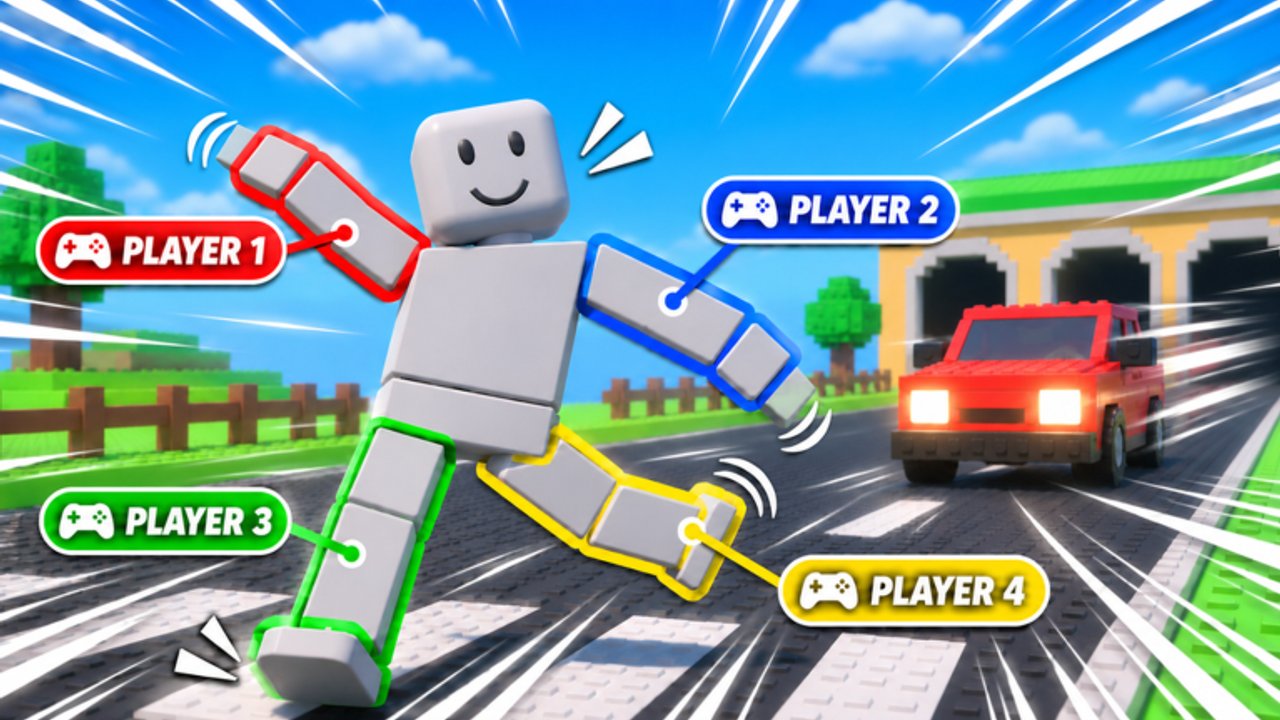
Control a Ragdoll Together! is famous for chaotic co-op, but the Roblox listing supports 1–4 players, and solo is a real way to learn the shared ragdoll. Alone, you are every limb owner, every caller, and every blame target. That raises attention load, yet it also removes social desync—the number-one Plains wipe for brand-new stacks. This guide explains how to practice solo, which limbs to prioritize mentally, when to invite friends, and how realistic a solo Ember Core clear is compared with a disciplined duo.
Refresh inputs in the controls guide and seating theory on the players hub before you treat late worlds like a rank grind.
What solo actually means here
You still drive one shared puppet. The difference is ownership: instead of friends claiming left arm or right leg, you sequence those inputs yourself. There is no teammate to blame—and the whose-fault overlay still flags which limb family broke the attempt. Treat that highlight as a private coach.
Voice Chat remains unsupported either way, so solo players skip Discord setup entirely. Text chat is optional; many solo runners keep a second-monitor checklist from the worlds walkthrough.
Attention load: the real boss
Co-op splits the cognitive pie. Solo stacks the whole pie on one brain. Practical consequences:
- You cannot watch a hammer cycle and invent a new meteor plan in the same second.
- Panic mashing multiplies because every limb is under your thumbs or keys.
- Fatigue arrives faster; short sessions beat heroic three-hour tilt marathons.
Mitigation habits:
- Scout a full hazard cycle from the last checkpoint before the attempt that “counts.”
- Move in micro-bursts—set arms, pause, set legs—rather than wiggling everything forever.
- Name the next single goal out loud (“clear two bars, then freeze”).
- Stop after two ugly fails and reset composure; solo ego fails look identical to co-op ego fails on the blame UI.
Mental limb priority
Think in roles even when you own them all:
- Legs first for traversal and spikes. Cadence and pauses keep the body alive on narrow floors.
- Arms first for monkey bars and rock walls. Latch, hold, release on a deliberate count you speak to yourself.
- Neutral default. If a limb is not needed on this beat, park it. Solo “helpful” flails tip the center of mass just like a noisy teammate.
On PC, many solo players prefer keyboard/mouse or a controller with clear face-button mapping so arm and leg intents do not blur. Mobile solo is possible but harsher on late timings—see device notes in controls.
Plains practice loops (your gym)
The opening Plains worlds are the best solo laboratory:
- Repeat the first checkpoint loop until walking feels boring.
- Add a short bar segment and rehearse release-on-go five times without advancing the campaign.
- Intentionally fail once, read the blame highlight, and correct only that input on the next try.
Boring repetition here buys calm later. Do not speed-run past early flags just because nobody is watching. Checkpoint discipline from checkpoints and Ember Core starts in world one.
Mid-campaign solo strategy
As monkey bars, rock walls, spikes, hammers, and falling meteors rotate in (see the obstacle guide):
- Split multi-hazard rooms into visual segments; clear one, freeze, restate the next.
- Accept slower clear times. Solo is a puzzle rhythm, not a speedrun flex.
- When a room clearly favors specialized arm timing, consider inviting a friend rather than brute-forcing for an hour.
Use the tier list as a difficulty mood board even in solo—knowing a room is arm-heavy helps you budget attention.
When to invite friends
Invite sooner if:
- The same hammer window beats you five times despite clean scouting.
- Meteor rains demand a spotter while legs dodge.
- You want comedy more than efficiency—the game’s fantasy is shared chaos.
Invite later if:
- Friends tilt easily and you still need Plains fundamentals.
- You are mapping layouts for a future co-op night.
- Schedule chaos would make a duo worse than focused solo reps.
Party-size tradeoffs and social jobs are expanded on the players hub and in co-op tips. A calm duo often clears farther than a loud four.
Ember Core realism for solo
Solo is allowed through the finale, but stacked hazards punish divided attention. Honest expectations:
- Expect longer reset loops and more checkpoint camping.
- Prefer learning Ember Core layouts solo, then returning with a duo for the push.
- If you insist on a solo clear, ban freestyle: one plan per attempt, one variable changed after each blame popup.
Finale seating and hammer/meteor stacking notes live in checkpoints and Ember Core.
Solo session templates
20 minutes: Plains walk + one bar drill + one blame review.
45 minutes: Push one mid-world checkpoint, three focused attempts, stop on tilt.
Friends hybrid: Solo warm-up ten minutes, then invite a duo partner for the scary room.
Ignore fake power fantasies on the scripts hub. Check updates if a patch retuned timings that broke your muscle memory. Codes FOMO on the codes hub does not replace practice.
Mindset that keeps solo fun
You are not “failing co-op” by playing alone—you are building the input library that makes co-op kinder later. Celebrate clean Plains loops. Log the limb pattern that fails most (whose fault). End sessions wanting one more try, not rage-quitting into a random public stack.
Solo mode is the quiet classroom inside a loud comedy game. Master attention, park idle limbs, drill the Plains, and invite friends when the room asks for a second brain—not when pride demands an audience.
Frequently Asked Questions
Quick answers to the most common questions.
Can I finish Control a Ragdoll Together completely solo?
Solo is supported for the full 1–4 player design, including late worlds. Ember Core is harder alone because stacked hazards split your attention.
Which limbs should I focus on first when solo?
Prioritize legs for walking and spikes, arms for bars and walls, and keep unused limbs neutral on every beat.
How do I practice efficiently alone?
Use Plains checkpoint loops, scout full hazard cycles, change only one input after each blame popup, and keep sessions short.
When should I invite friends instead of staying solo?
Invite when hammers or meteors need a spotter, when the same room stalls you after clean scouts, or when you want shared comedy more than layout mapping.
Does the blame system work in solo?
Yes. It still highlights which limb caused the fail—use it as a personal drill cue.
Is mobile solo realistic?
Possible for early worlds, but late timings are harsher. Many players prefer PC or controller for solo mid-to-late campaign work.